FarmVille 3 – Farm Animals
- 4.4
- Rating
- 10.00M
- Installs
- Free
- Price
 Analysis by App-foxy
FarmVille 3 – Farm Animals is the kind of simulation game I open when I want a gentle routine rather than a demanding challenge. Its basic idea is easy to understand: I look after a farm, feed animals, grow resources, and gradually make the property feel more complete. That simplicity is its biggest strength, but it also means the experience depends heavily on whether I enjoy repeating small tasks and waiting for progress.
Developed by Zynga, this free game sits in the familiar farming-simulation space while putting animals at the center of its identity. The presentation is bright, friendly, and clearly designed to feel welcoming from the first few minutes. I never felt lost about the general goal, which makes it approachable for younger players and for anyone who does not usually play management games.
Its audience is broad: the content rating is Everyone, the minimum requirement is Android 6.0, and the game has passed the ten-million-install mark. Those details match my impression of it as an accessible mobile title rather than a niche strategy game. It is easy to start, easy to understand, and comfortable to play in short sessions.
You May Also Like

 Blood Strike: 2.5 Anniversary
Blood Strike’s Loadouts Turn Every Drop Into a Tactical Gamble
A close look at Blood Strike’s custom loadouts: how fast access to signature weapons reshapes its battle royale rhythm, rewards preparation, and narrows the gap between fights.

 Pandora - Music & Podcasts
Pandora’s Music Is Easy to Start, but Harder to Recover
Pandora’s strength is its low-effort path from a seed to a station. Its weak spot is how much confidence it asks you to place in connection, setup, and quiet recovery.

 8 Ball Pool
 Is Built on Rivalries, Rematches, and Routine
A close look at the rivalries, rematches, shared routines, and unanswered safety questions that turn a quick pool match into a persistent mobile community.

 Samsung Music
’s Quiet Strength Is Playing What You Already Own
Its reach comes less from spectacle than from dependable access to a personal library. That simplicity is both the app’s strongest retention engine and its ceiling.

 AccuWeather: Weather Radar
AccuWeather Review: A Quick, Clear Forecast for Everyday Decisions
For everyday plans, the best forecast is the one you can understand quickly. AccuWeather makes rain timing, radar, and local conditions easy to act on, with a few trade-offs.

 Hill Climb Racing
Why Hill Climb Racing Still Turns Crashes Into One More Run
A tiny car, a bumpy hill and one more upgrade: Hill Climb Racing keeps resurfacing because its simple chaos makes every near-miss feel personal.
More From Our News Desk



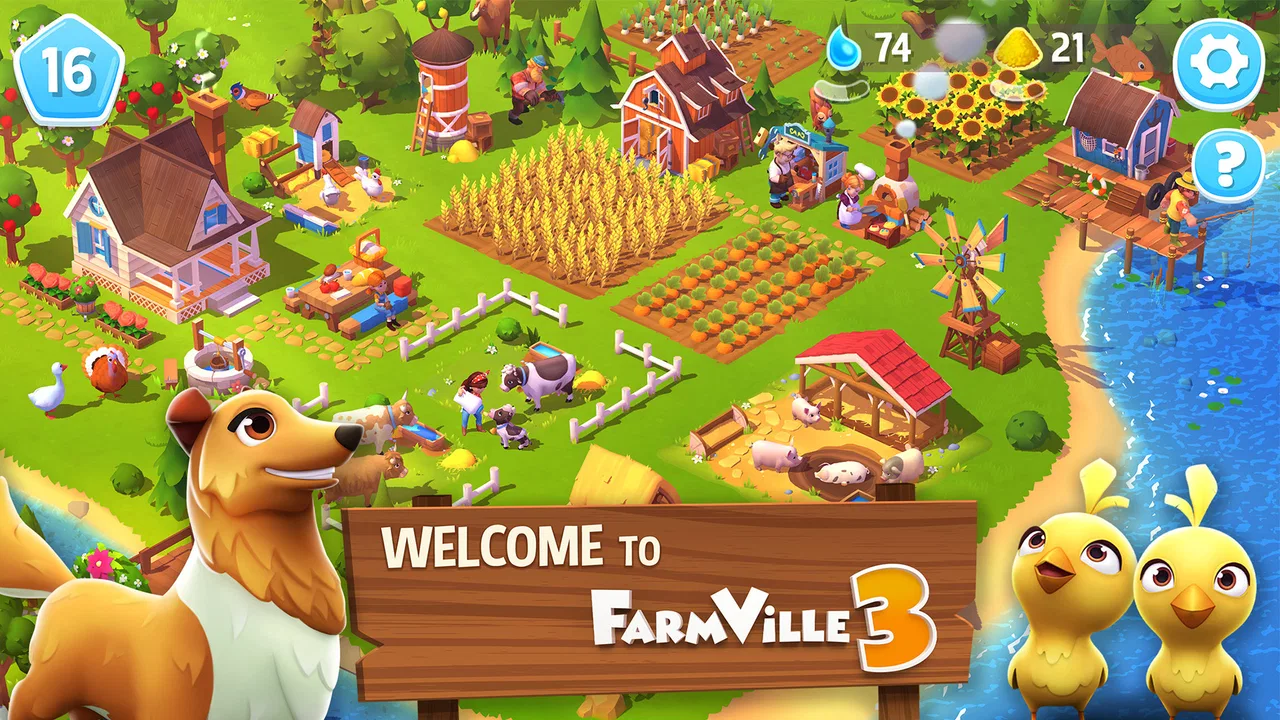
A welcoming farm with a very clear visual language
I find that FarmVille 3’s welcoming look does more than set a cheerful mood: it helps me read the farm quickly and decide what to do during a brief visit. I’ll focus on how that clear visual language supports navigation, while also considering where friendly presentation can’t make a familiar routine feel new.
The first minutes establish the mood quickly
My first impression was shaped less by complexity than by clarity. The farm is presented as a cheerful place filled with colorful animals, tidy spaces, and readable objects. The art direction avoids a harsh or realistic look, so the experience feels closer to an animated storybook than to a serious agricultural simulator. That choice matters because it tells me exactly how to approach the game: relax, organize, collect, and improve things at my own pace.
The visual design also helps with the practical side of playing on a phone. Buildings, animals, crops, and interactive areas are distinct enough that I can understand the scene without studying every corner. When a game asks me to manage several activities, visual confusion can become tiring. Here, the friendly shapes and strong color separation make the farm feel readable even during a quick check-in.
I particularly like how the setting gives ordinary tasks a sense of place. Feeding an animal is not just another button press; it belongs to a farm that gradually becomes more familiar. As I return, I recognize the areas I have already worked on and notice which parts still need attention. That continuity creates a small emotional reward, even when the underlying action is simple.
Animal-focused charm without pretending to be a deep simulator
The animals are the strongest part of the game’s personality. They make the farm feel alive and give the routine a warmer purpose than simply collecting materials. I find that useful because a purely numerical management game can become dry quickly. The animal theme gives the daily cycle a softer emotional tone and makes progress easier to follow.
At the same time, I would not approach this as a detailed agricultural simulation. It does not ask me to understand real farming economics or make difficult production forecasts. Instead, it turns farm care into a series of approachable interactions. That is a good fit for casual play, but players looking for realism, complex market decisions, or a highly demanding management layer may find it too light.
The setting also avoids the pressure of a dramatic story. I am not pushed through a dark conflict or a complicated narrative. The farm itself is the main subject, and the pleasure comes from seeing it become more useful and attractive. For me, that makes the game especially suitable after work or during a quiet break, when I want something pleasant that does not require intense concentration.
How the presentation affects navigation
One of the less obvious strengths of the art direction is that it reduces the mental effort of planning. Because the world is clean and colorful, I can scan it and decide what deserves attention first. I do not need to memorize a complicated interface before making sensible choices. That makes the game more inviting than some alternatives that bury their farming systems beneath menus.
My practical advice is to spend the opening sessions learning the layout instead of trying to improve every area at once. I find it easier to build a habit around one small route: check the animals, handle available farm work, collect finished items, and then decide whether there is enough time for another task. This keeps the farm from feeling like a list of obligations.
That approach also exposes one limitation. Once the novelty of the setting fades, the visual charm has to carry a repeated routine. If I am not in the mood for incremental improvement, the same welcoming presentation cannot completely hide the fact that many actions follow familiar patterns. The art makes the loop pleasant, but it does not transform it into a radically different genre.
Sound, quiet moments, and the pace of play
The overall mood works best when I treat the game as a series of short visits. I can open it, check what needs attention, make a few decisions, and leave without feeling that I have abandoned a demanding campaign. That pacing is one of the clearest reasons I would recommend it to casual players. It fits naturally into a spare moment rather than asking for a long uninterrupted session.
The sound design supports that relaxed rhythm instead of competing with it. The farm atmosphere feels light and playful, which complements the rounded visual style. I do not experience the setting as tense or noisy; the audio helps maintain the impression that this is a place I can return to for a calm reset.
For some players, that restraint may feel too quiet. I enjoy games with stronger musical identity and more dramatic feedback, and this is not where I would look for an intense audio experience. Here, sound is mainly a mood-setting tool. It reinforces the farm’s friendliness, but the visual world and the management loop remain the main reasons to keep playing.
The rhythm is also influenced by the game’s free-to-play structure. The download costs nothing, but optional purchases range from $0.99 to $199.99 per item. I can begin without paying, which is important for deciding whether the routine suits me, yet the presence of purchases means I need to be deliberate about my expectations. I prefer to treat spending as optional convenience rather than as part of the basic plan.
Where the farming loop fits well
The mechanical appeal comes from combining several small responsibilities into one easy-to-read cycle. I look after the farm, respond to what is ready, and use the results to support further improvement. None of these actions is intimidating on its own. Together, they create a satisfying sense that my attention is helping the property move forward.
The game works particularly well for players who like visible progress but do not want complicated controls. I can make a few choices, see the result, and return later. That makes it a useful companion for a daily routine. For example, I might open it while waiting for a train, check the animals, collect completed work, and make one or two decisions before closing it again. The session feels complete even if I do not stay for a long time.
A more useful strategy than rushing everything is to decide what kind of visit I am making. On a quick visit, I focus on immediate animal care and collection. On a longer visit, I look at the farm as a whole and decide which area deserves attention next. Separating those two modes prevents me from turning a relaxing game into a chore.
I also recommend resisting the urge to spend simply because a task is taking time. Waiting can be part of the intended rhythm, and paying to remove every pause may make the experience feel less like a calm simulation and more like a constant series of interruptions. The purchase system is not automatically a problem, but it rewards players who set a personal limit before they become invested in the farm.
What makes it different from familiar alternatives
Compared with more traditional farming games, this one feels more focused on approachability and animal-centered charm than on detailed planning. Some alternatives put greater emphasis on crafting chains, exploration, character relationships, or long-term economic optimization. I would choose those games instead if I wanted a richer story, more complex production decisions, or a stronger sense of discovery.
FarmVille 3 – Farm Animals is a better match when I want the farm itself to remain the main attraction. The setting is easy to read, the tone is consistently cheerful, and the tasks are broken into manageable pieces. It does not ask me to become an expert farmer. It asks me to keep returning to a pleasant place and make it a little better.
That difference is important for families and casual players. The Everyone rating supports its broad accessibility, while the straightforward presentation makes it easier to share the general idea with someone who has never played a farming game. Still, younger players may need guidance around optional purchases, especially because the available price range includes much larger items as well as small ones.
Who should play and who may want another option
I would recommend it to someone who enjoys colorful simulation games, animal themes, and progress that arrives through regular check-ins. It is also a good choice for players who want a low-pressure activity with enough structure to prevent aimless wandering. The game gives each visit a reason, but it does not demand the intensity of a competitive strategy title.
I would be more cautious recommending it to anyone who dislikes timers, repeated collection, or free-to-play economies. If your ideal game lets you make one major decision after another with no waiting, this farm may feel slow. Likewise, if you want realistic agriculture, deep logistics, or a dramatic narrative, the cheerful simplicity may seem shallow rather than relaxing.
Players on older devices should also check that their phone or tablet runs Android 6.0 or later. The current version is 1.68.51908, so keeping the installation current is sensible when possible. I would not choose the game solely because it is free; I would choose it because its short-session rhythm and friendly farm setting match the way I actually want to play.
The small habits that improve the experience
My first useful habit is to avoid treating every available action as equally urgent. The farm becomes easier to manage when I identify the task that will make the next visit smoother, rather than tapping through everything automatically. This turns a collection of chores into a simple priority system and helps preserve the relaxed mood.
My second tip is to use the visual layout as a memory aid. Instead of repeatedly opening menus to remember what I was doing, I can associate parts of the farm with particular responsibilities. That makes returning after a break less disorienting and lets me resume quickly. It is a small advantage, but it matters in a game designed around frequent short visits.
My third tip concerns spending: decide in advance whether you are playing for free or allowing a limited convenience budget. Mixing those approaches impulsively can make progress feel uneven. I enjoy the game more when I judge each purchase by whether it improves my routine, not merely whether it removes a moment of waiting.
There is also a useful social distinction in how the game feels to different players. Someone who enjoys decorating a personal space and watching it gradually develop may find the farm rewarding even when the mechanics are familiar. Someone who needs constant novelty may run out of motivation sooner. The same gentle pacing that makes the game comfortable for one person can feel repetitive to another.
My verdict on the atmosphere and the long-term fit
FarmVille 3 – Farm Animals succeeds because its visual language, animal theme, sound, and pacing point in the same direction. Everything encourages a friendly, low-pressure visit. The farm looks welcoming, the interactions are understandable, and the short-session structure gives the game a natural place in an everyday routine.
Its weaknesses come from that same consistency. The experience is not trying to be a demanding strategy game, and players who want deep simulation may find the systems too gentle. The free-to-play purchases also deserve attention, particularly for families, while the repeated cycle may lose its appeal if I expect constant surprises.
Still, I think the balance is convincing for its intended audience. The game has an average rating of 4.3 from around 182 thousand ratings, which fits my view that many players respond well to its approachable style. I would install it when I wanted a colorful animal farm to revisit in small portions, not when I wanted a complex agricultural sandbox.
My final recommendation is simple: choose it for mood and routine, not for realism or high-pressure strategy. If a calm farm, friendly animals, and gradual progress sound like a good way to fill a few spare minutes, Zynga’s game is easy to settle into. If you prefer complete control over pacing, minimal purchase prompts, or intricate systems, a more involved farming alternative will probably suit you better.
FAQs for FarmVille 3 – Farm Animals
01What is FarmVille 3 – Farm Animals about?
FarmVille 3 – Farm Animals is a farming simulation game where players manage and grow their own farm. Players can plant crops, raise various animals, and collect resources to expand their farming empire. The game offers an engaging experience with vibrant graphics and interactive features that appeal to both casual and dedicated gamers.
02Is FarmVille 3 – Farm Animals free to play?
Yes, FarmVille 3 – Farm Animals is free to download and play. However, like many free-to-play games, it offers in-app purchases. These purchases can enhance gameplay by providing additional resources or speeding up progress, but they are not necessary to enjoy the full game experience.
03What platforms is FarmVille 3 – Farm Animals available on?
FarmVille 3 – Farm Animals is available on both Android and iOS platforms. Players can download the game from the Google Play Store for Android devices or the Apple App Store for iOS devices, ensuring a wide accessibility for users across different devices.
04Can I play FarmVille 3 – Farm Animals offline?
No, FarmVille 3 – Farm Animals requires an internet connection to play. The game features social elements and regular updates that need online connectivity. This allows players to interact with friends, participate in events, and receive new content seamlessly.
05What new features does FarmVille 3 – Farm Animals offer compared to previous versions?
FarmVille 3 introduces several exciting new features, including a diverse range of animals, customizable farms, and interactive breeding mechanics. The game also boasts improved graphics and user interface, making it more immersive. Additionally, players can engage in community events and challenges that were not available in earlier versions.
Pros
- Engaging graphics and animations.
- Variety of animals to collect.
- Regular updates with new content.
- Easy to play for all ages.
- Offline mode available.
Cons
- In-app purchases can get pricey.
- Requires constant internet connection.
- Limited storage space for items.
- Energy system can be restrictive.
- Long waiting times for building.

FarmVille 3 – Farm Animals
Gallery